RECEPTION AREA
2016 | Hospice Project | Arch-con Atelier
A WELCOMING THRESHOLD BETWEEN THE OUTSIDE WORLD AND THE HOSPICE
The Hospice Reception was conceived as one of the most important spaces in the building: the first point of arrival for patients, families and visitors, and therefore a space capable of carrying significant emotional weight.
The brief called for more than a functional reception and waiting area. It required a warm, calm and non-institutional environment—one that could reduce anxiety, provide gentle privacy and offer a sense of welcome and dignity.
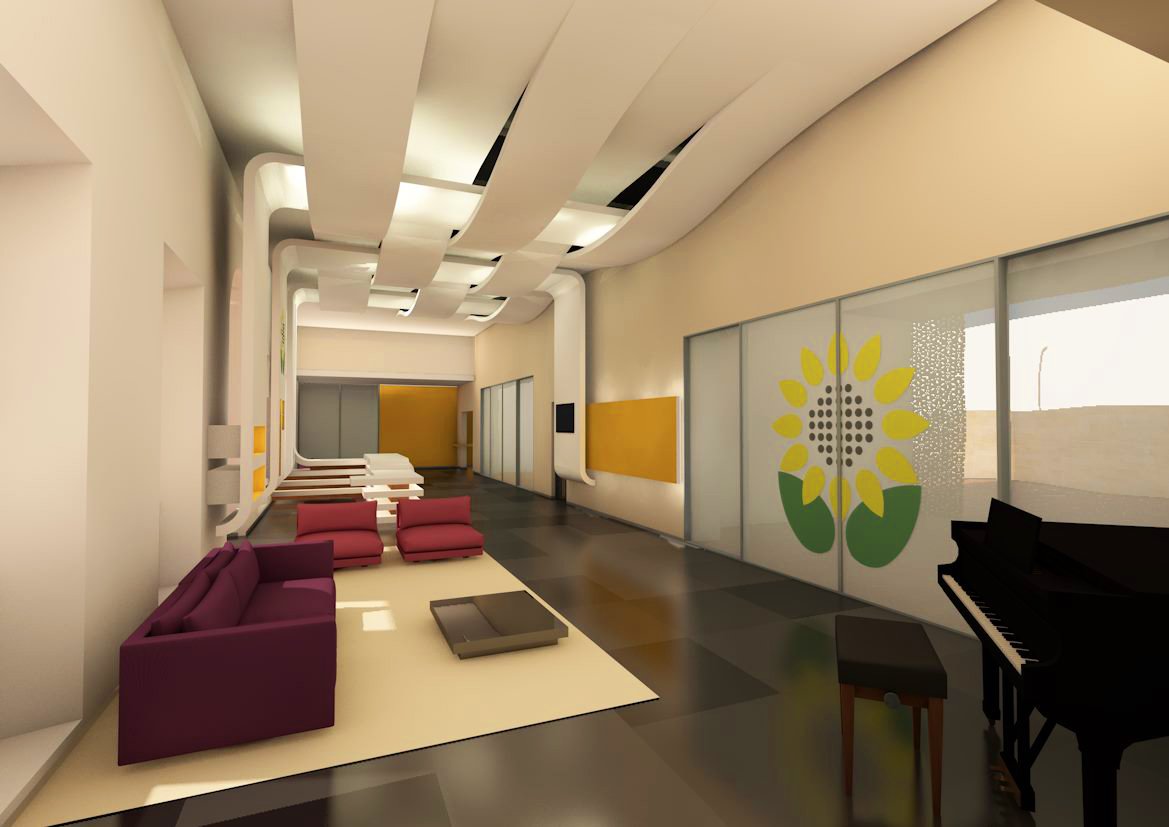
The design responds to this brief by creating an open, legible and homelike environment, where architecture, furniture, lighting, colour and detailing are conceived as one continuous experience.
A CLEAR AND WELCOMING ARRIVAL
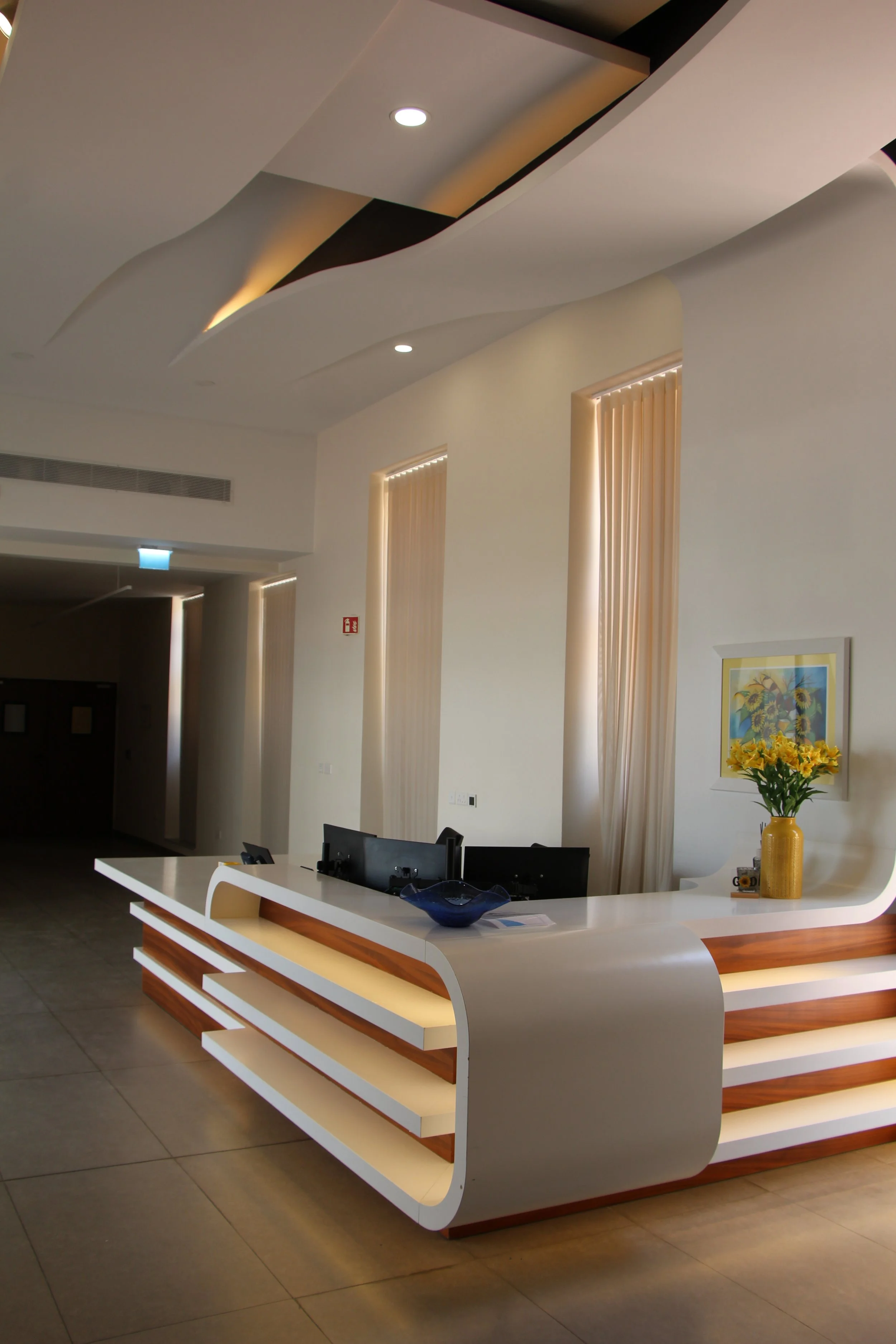
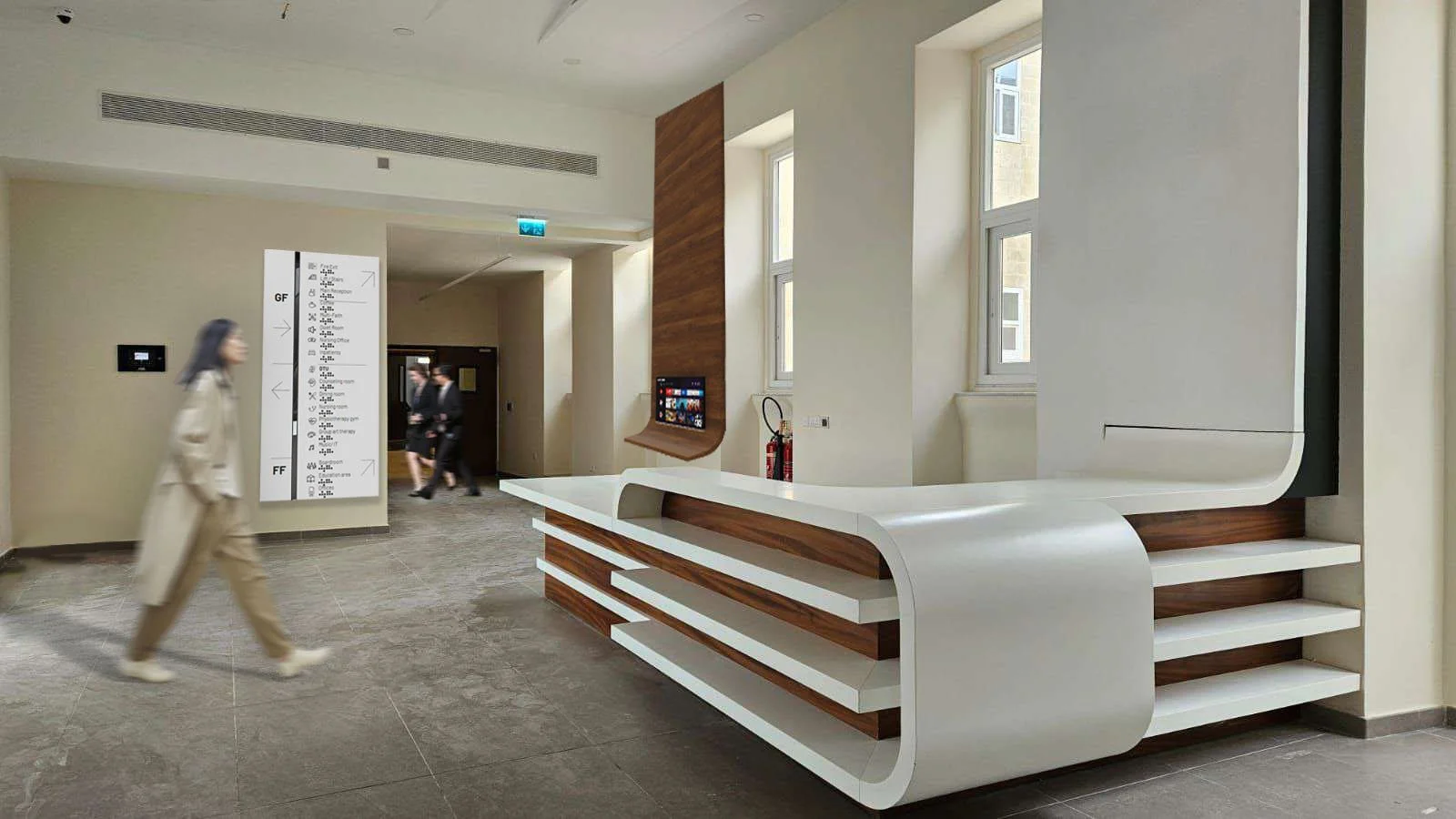
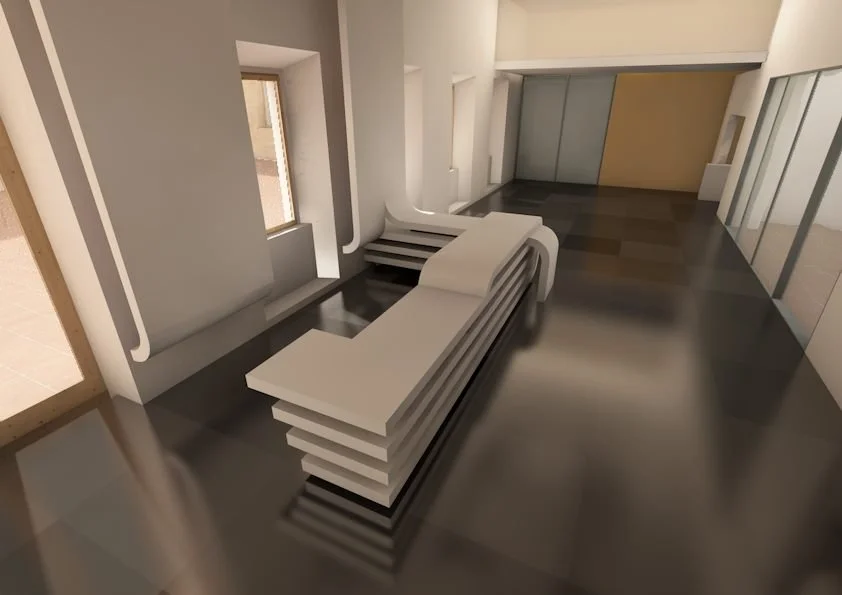
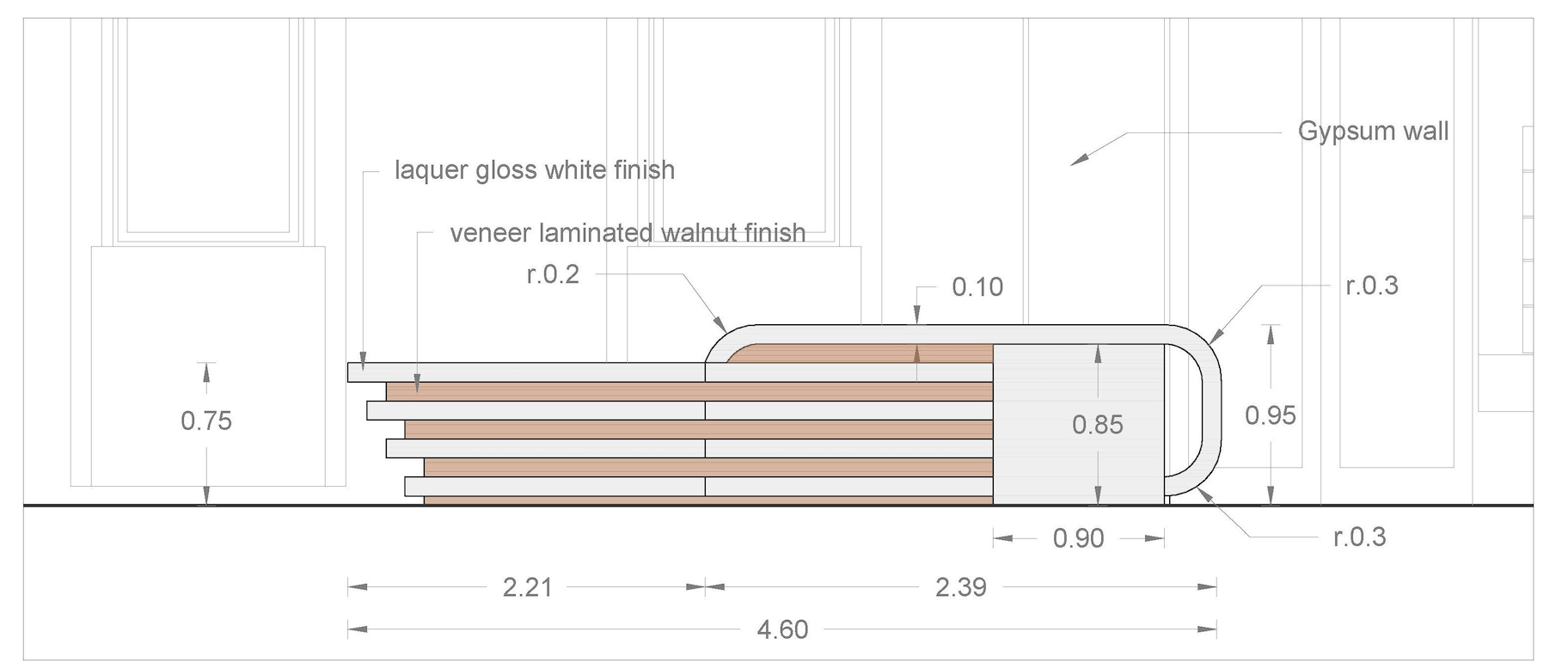
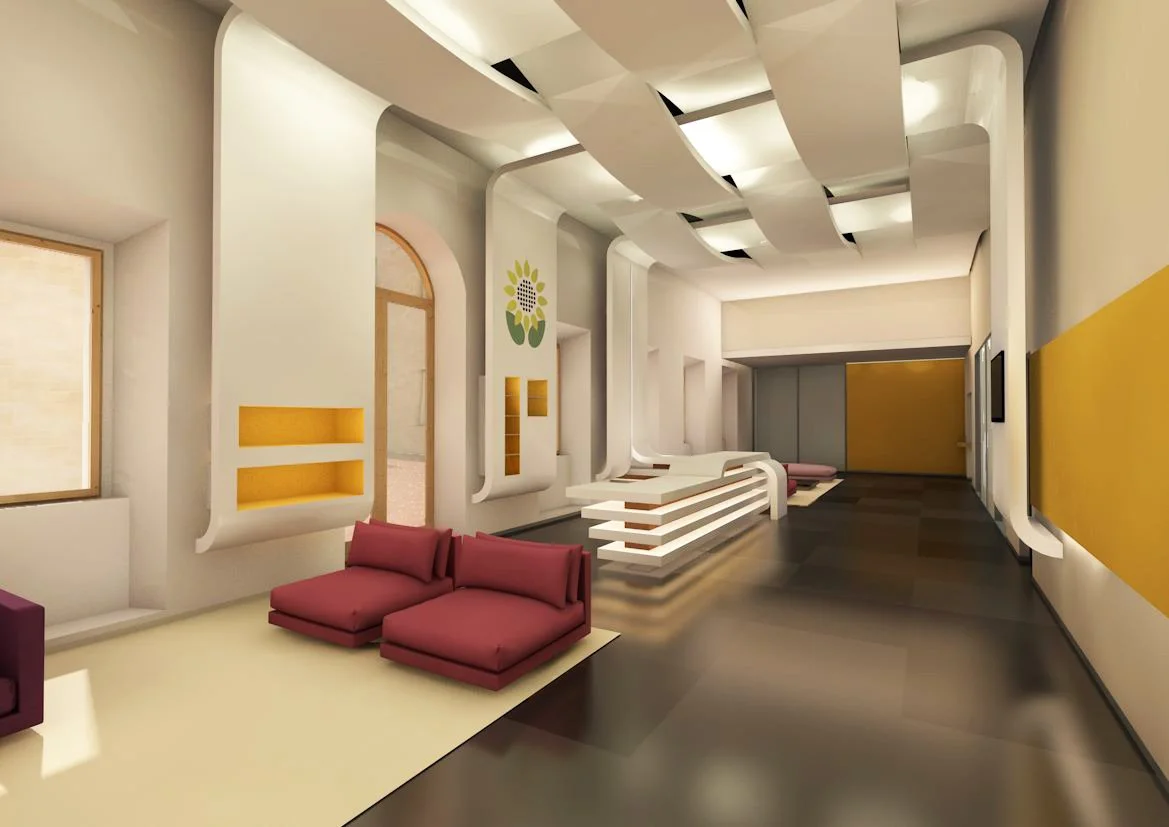
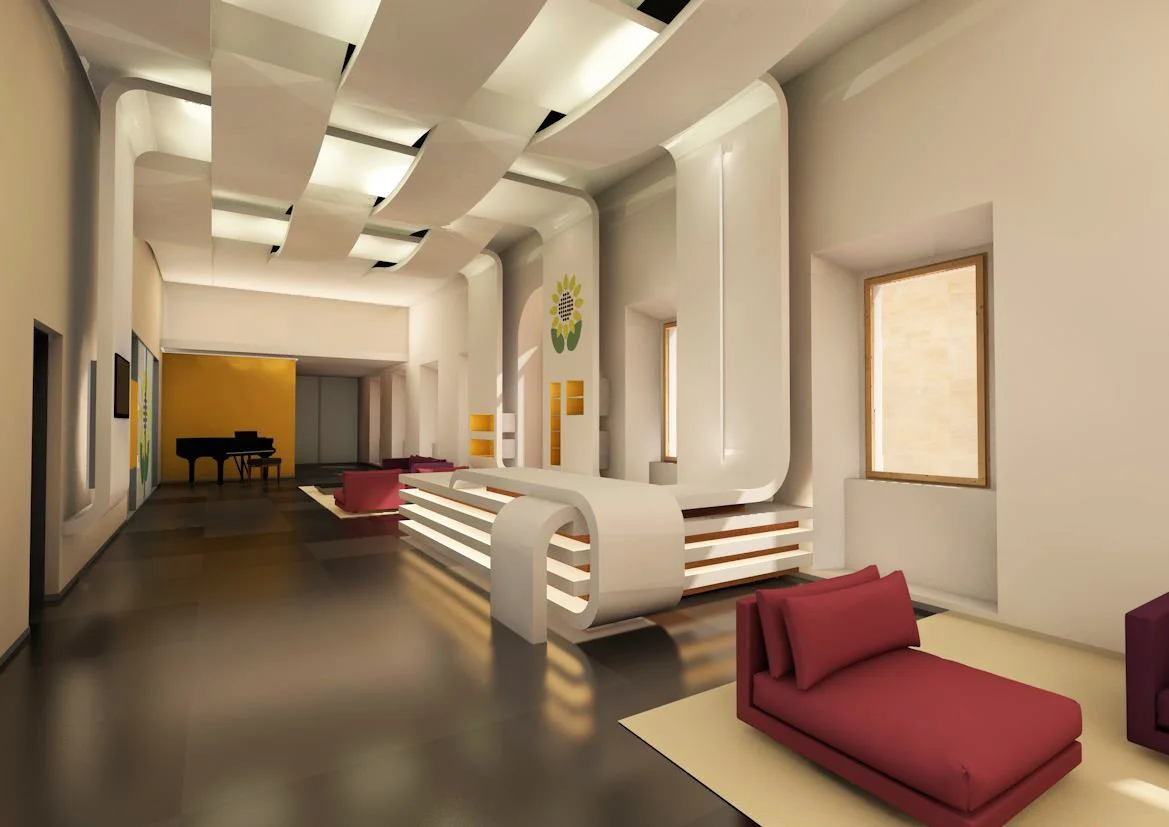
The main entrance is deliberately visible from all approaches and is marked by a protective overhanging porch. From the moment of arrival, the visitor is given a clear sense of orientation and welcome. The reception desk was designed as an integral part of the architecture rather than as an independent piece of furniture. Its low and open form replaces the institutional character of a high reception barrier, encouraging a more natural and human interaction between staff and visitors.
PRIVACY WITHOUT ISOLATION
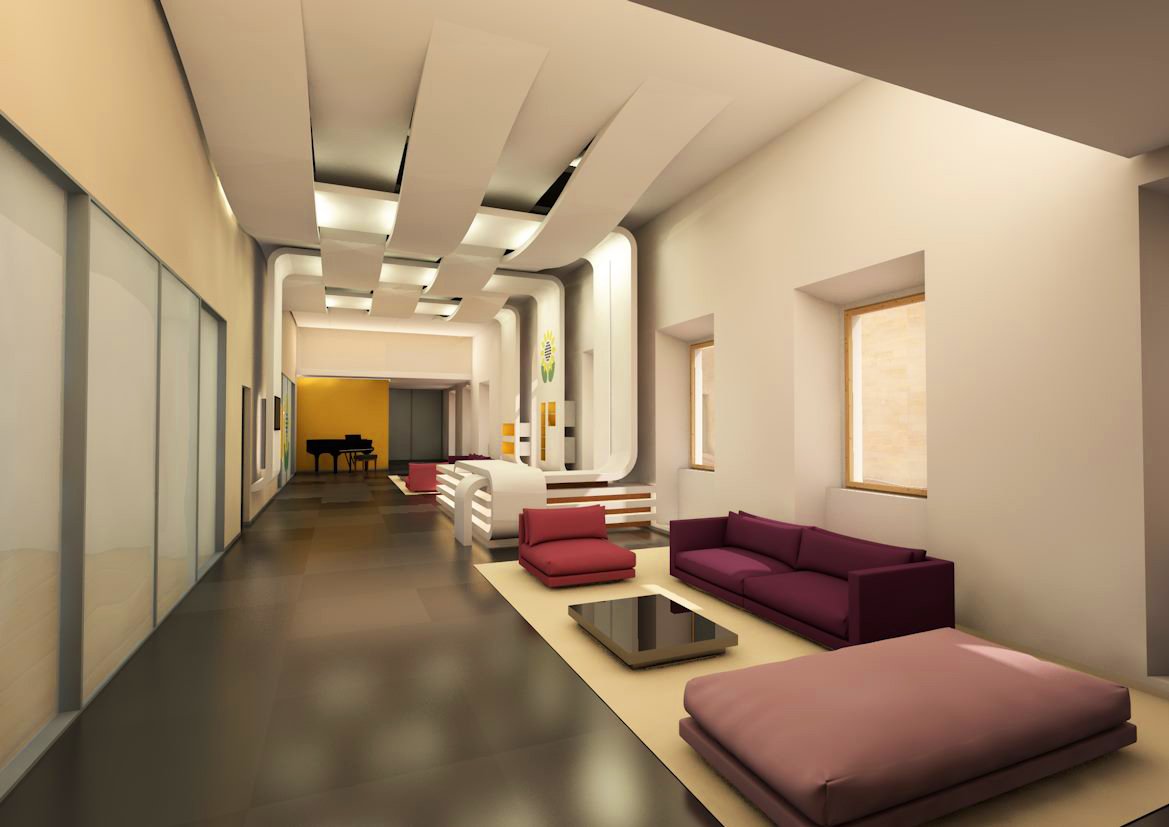
Quiet, semi-private seating ‘alcoves’ are positioned immediately beside the reception area. These provide a degree of privacy for patients and families while remaining connected to the main space. They also offer a place of retreat for visitors who may feel unwell, anxious or overwhelmed on arrival.
INTUITIVE MOVEMENT
Way finding was intentionally kept simple. Routes towards the Inpatient areas, Day Therapy, Administration and Education spaces are immediately understandable, avoiding confusing corridors and unnecessary visual complexity. The reception therefore acts not only as a greeting space, but as the orienting heart of the Hospice.
BRINGING WARMTH INTO THE ARCHITECTURE
The residential character of the interior evolved from the Hospice's sunflower emblem. Its warmth is reflected through a palette of soft earth tones, warm neutrals and gentle sunflower accents, complemented by comfortable furnishings and natural light.
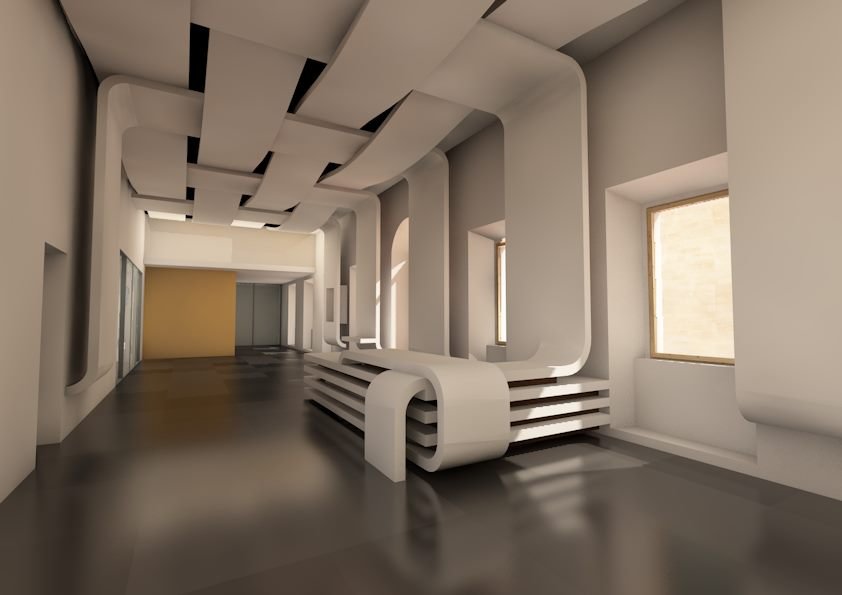
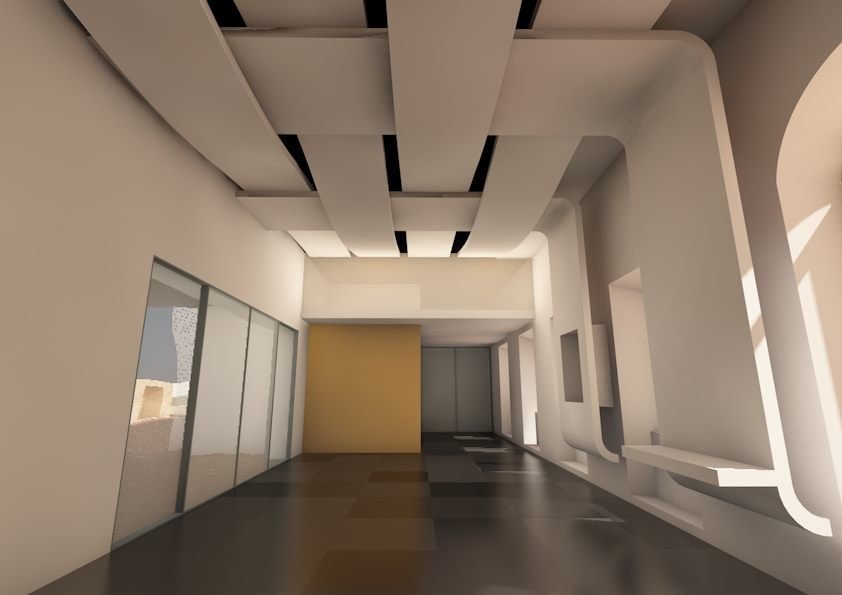
A defining architectural element is the intricate, crocheted-like soffit. Conceived as more than a ceiling treatment, it becomes a three-dimensional surface that extends into the walls, forming customised alcoves and ultimately integrating with the reception desk.
Hidden indirect lighting is integrated within this architectural layer, creating a soft and diffused illumination throughout the space.
ARCHITECTURE, LIGHT AND LANDSCAPE
Large glazed openings provide direct views towards the secure garden, bringing natural daylight, greenery and indoor planting into the reception environment. The relationship with the garden helps create a sense of calm and provides a visual connection with nature at the point of arrival. The sculptural soffit also contributes to acoustic control, helping maintain the quiet and peaceful atmosphere essential to a Hospice environment.
HOSPITALITY AND INFORMATION
A discreet self-service beverage area provides a simple hospitality function for families and visitors, while an integrated information kiosk offers accessible guidance on Hospice care, services and community support without disrupting the calm character of the reception.
ONE CONTINUOUS ARCHITECTURAL GESTURE
The final design brings together the requirements of the brief through a single architectural language. The ceiling flows into the walls, forms bespoke alcoves and continues into the reception desk, transforming what could have been a conventional reception into a three-dimensional architectural environment.
The intention was to move away from the institutional character normally associated with healthcare reception areas and create instead a space that feels calm, welcoming, dignified and human.
Through careful integration of architecture, light, colour, acoustics, landscape and craftsmanship, the reception becomes more than an entrance. It establishes the emotional character of the Hospice from the moment one arrives.