PROJECT AUBERGE D'ITALIE
PROJECT ARCHITECT CLAUDE BORG
2001 | Malta Center for Restoration with Restoration Unit
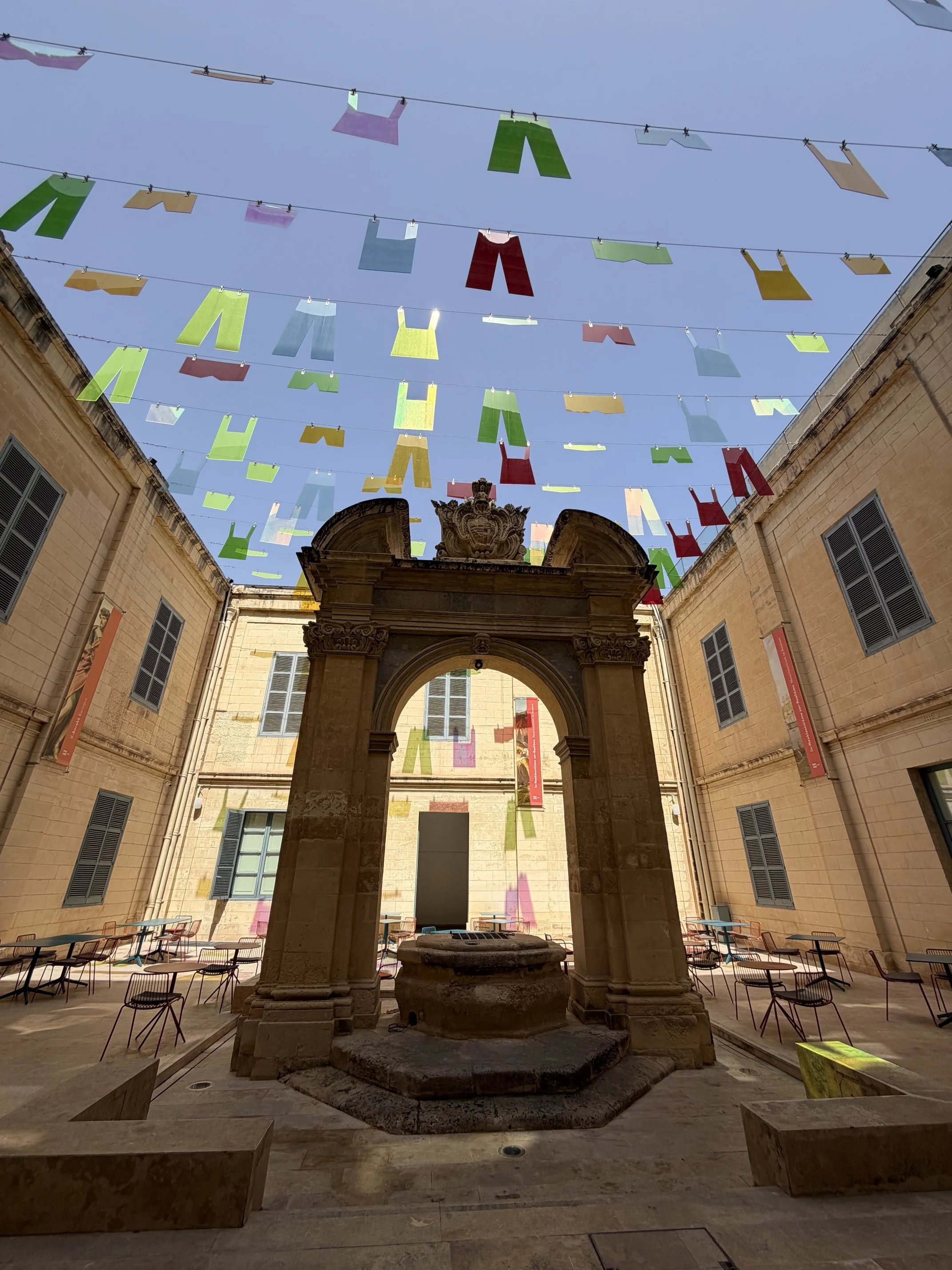
AUBERGE D’ITALIE: RESTORATION OF THE COURTYARD ARCH AND WELL
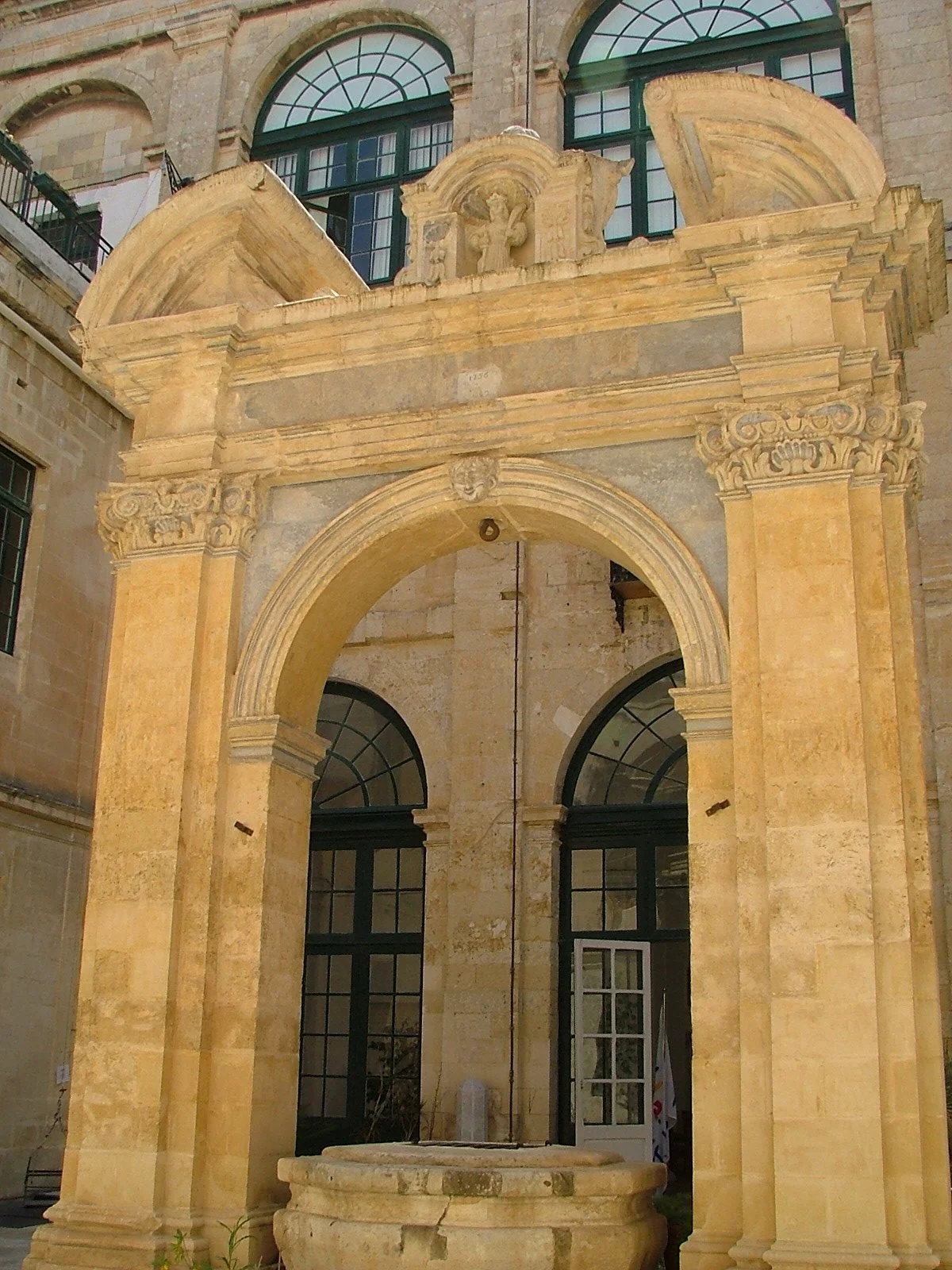
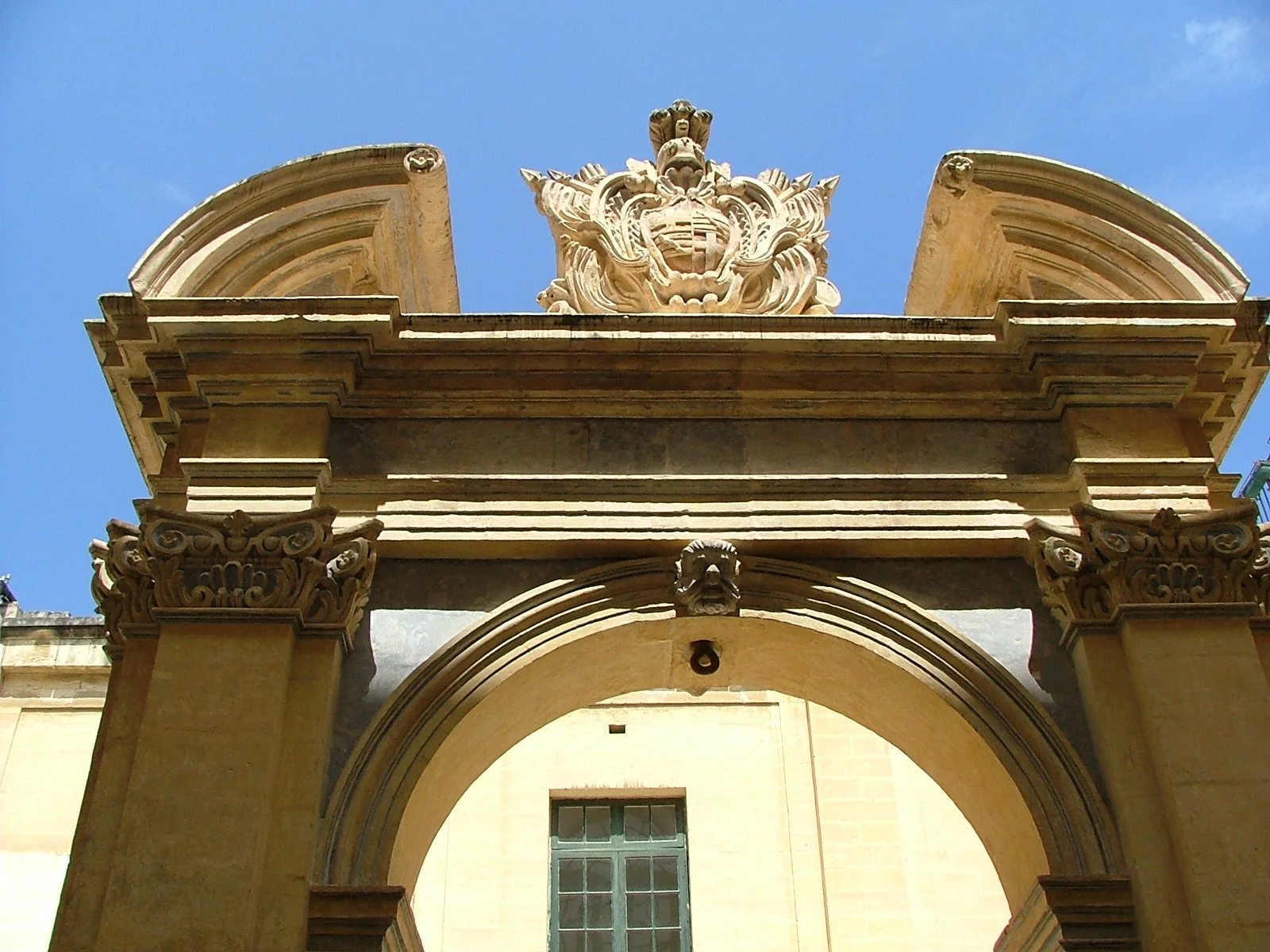
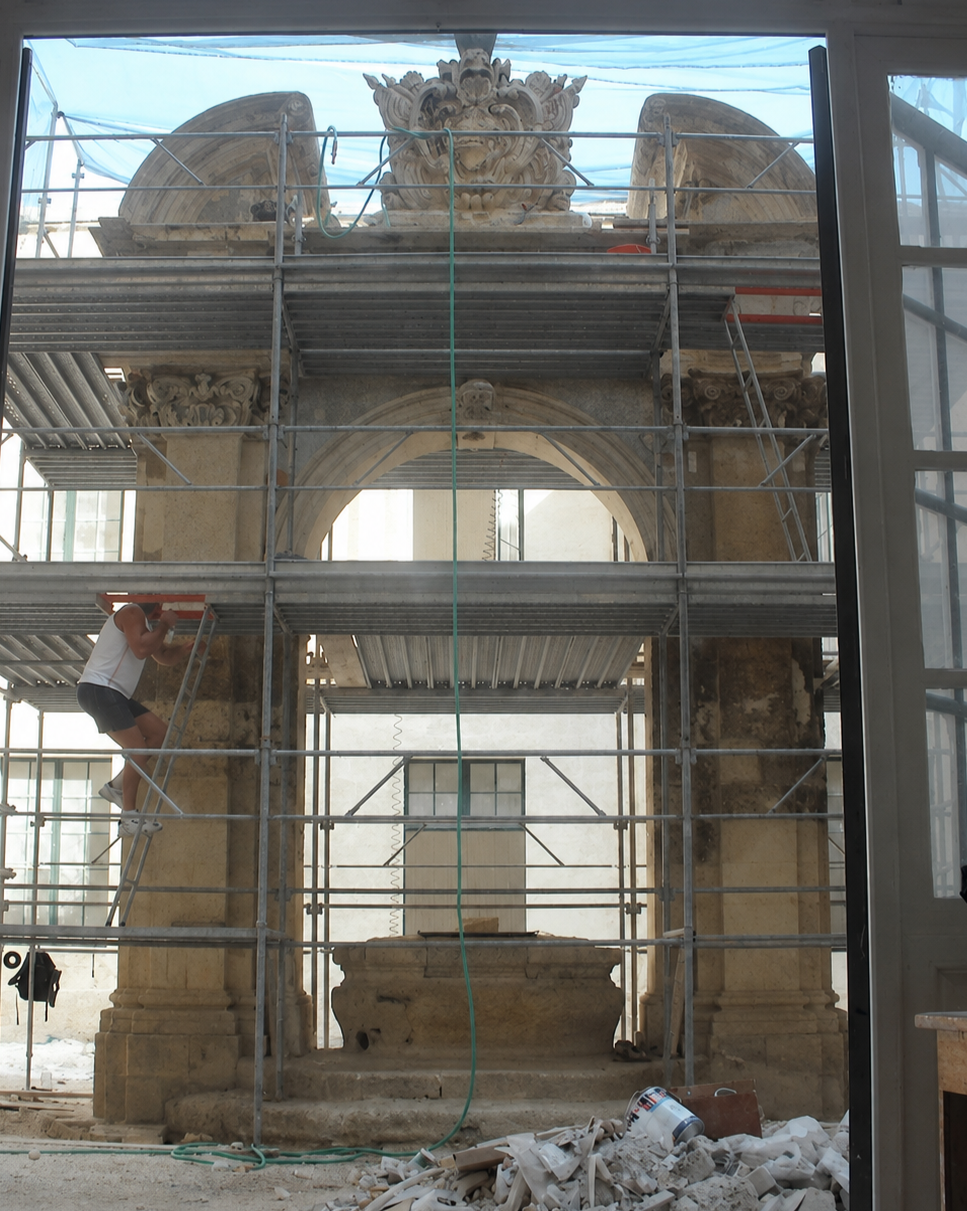
The historic Arch and Well in the Courtyard of Honour at the Auberge d’Italie were carefully restored, conserving important architectural features and revealing details that had remained hidden beneath centuries of dirt, repairs and later finishes.
The intervention focused on cleaning, repairing and protecting the historic stonework while retaining as much original material as possible.
The project also formed an important part of the newly established Mastru u Sewwej course. Much of the restoration work was carried out by students as part of their practical on-site training, working alongside and under the guidance of specialised conservators. The Arch and Well therefore became a real working classroom, allowing students to gain hands-on experience in traditional materials, conservation techniques and the careful treatment of historic fabric.
REVEALING THE ORIGINAL COLOURS
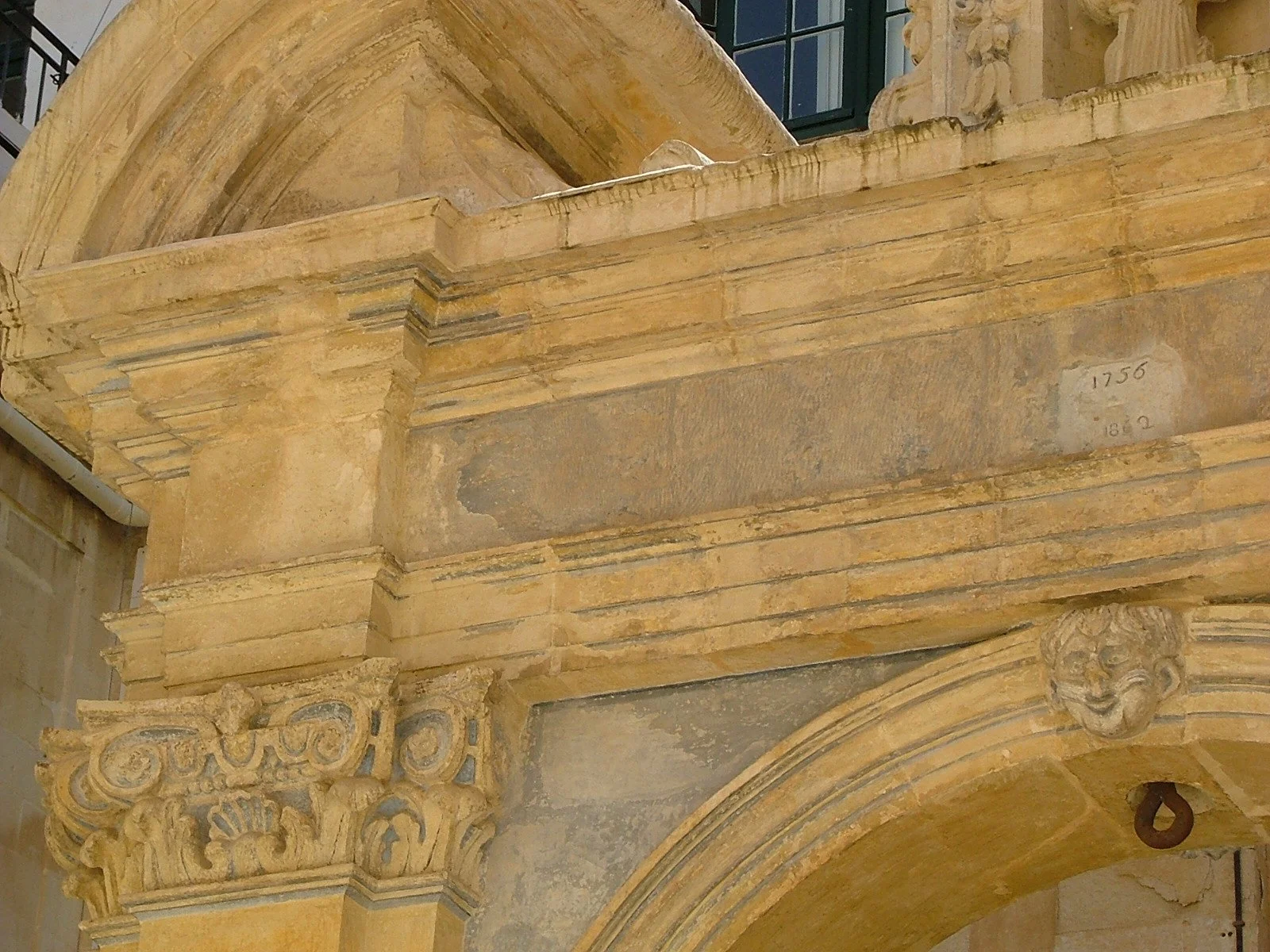
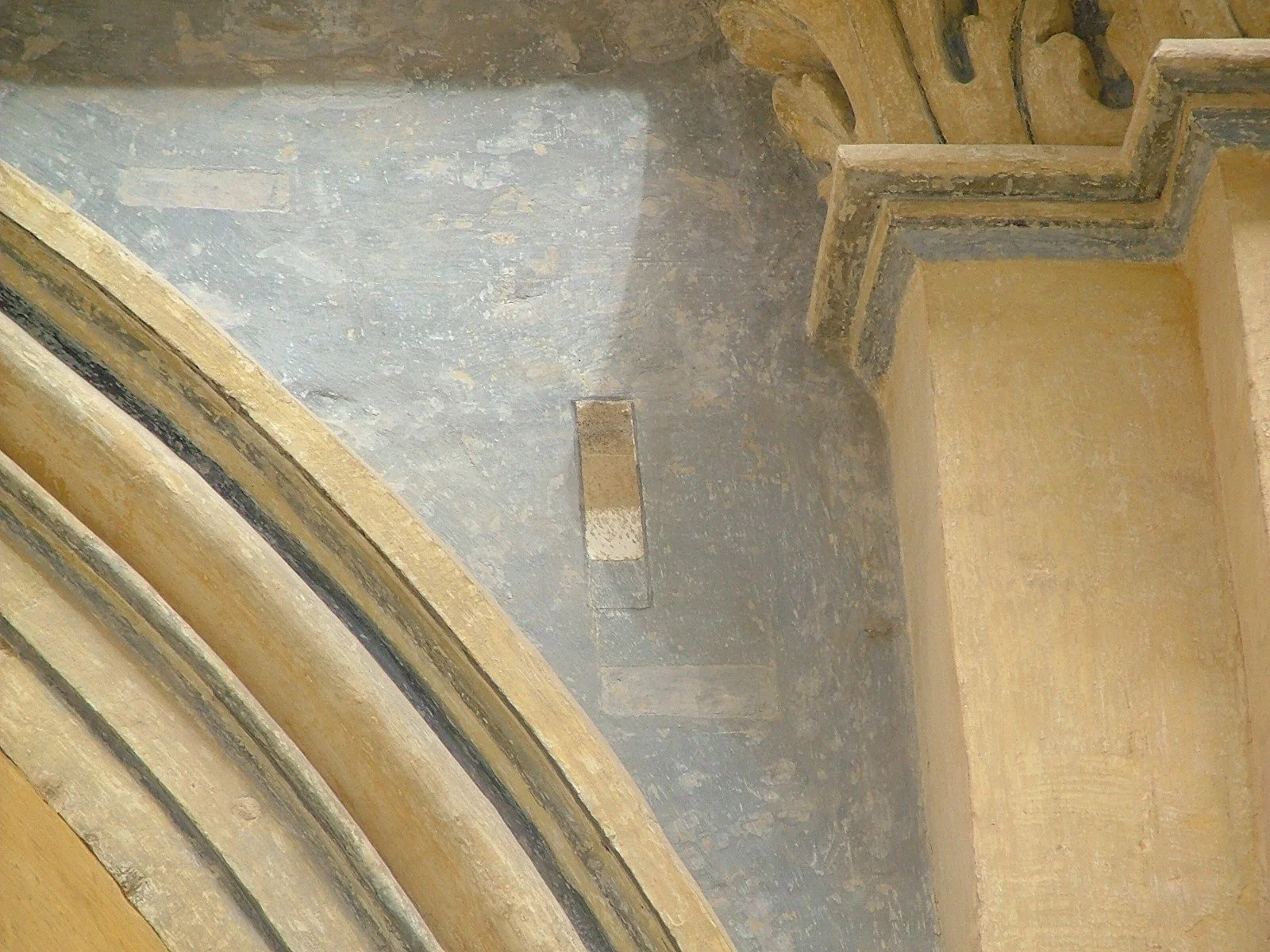
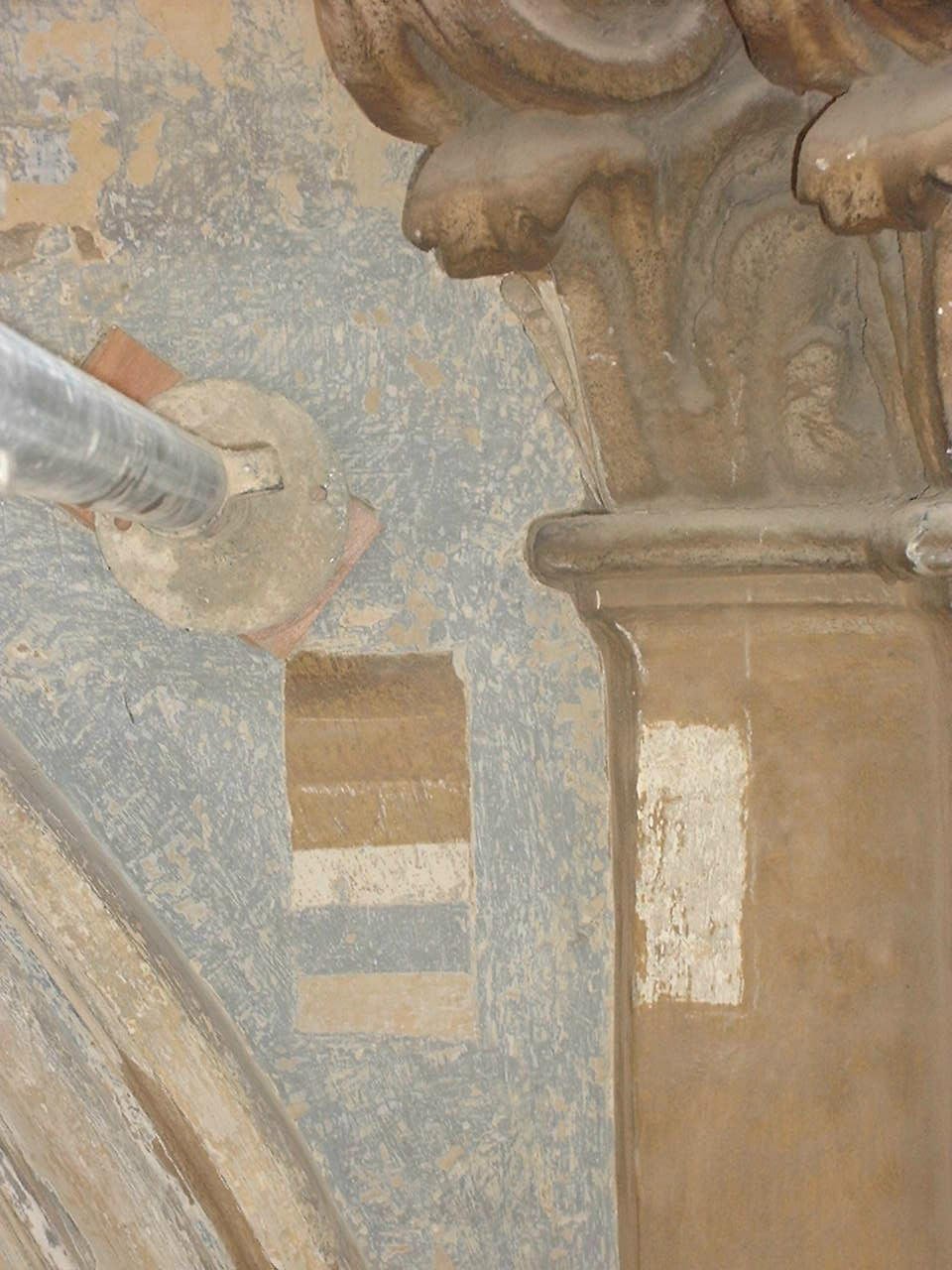
One of the most significant discoveries made during the restoration was evidence of an earlier painted finish beneath later layers of white and ochre wash.
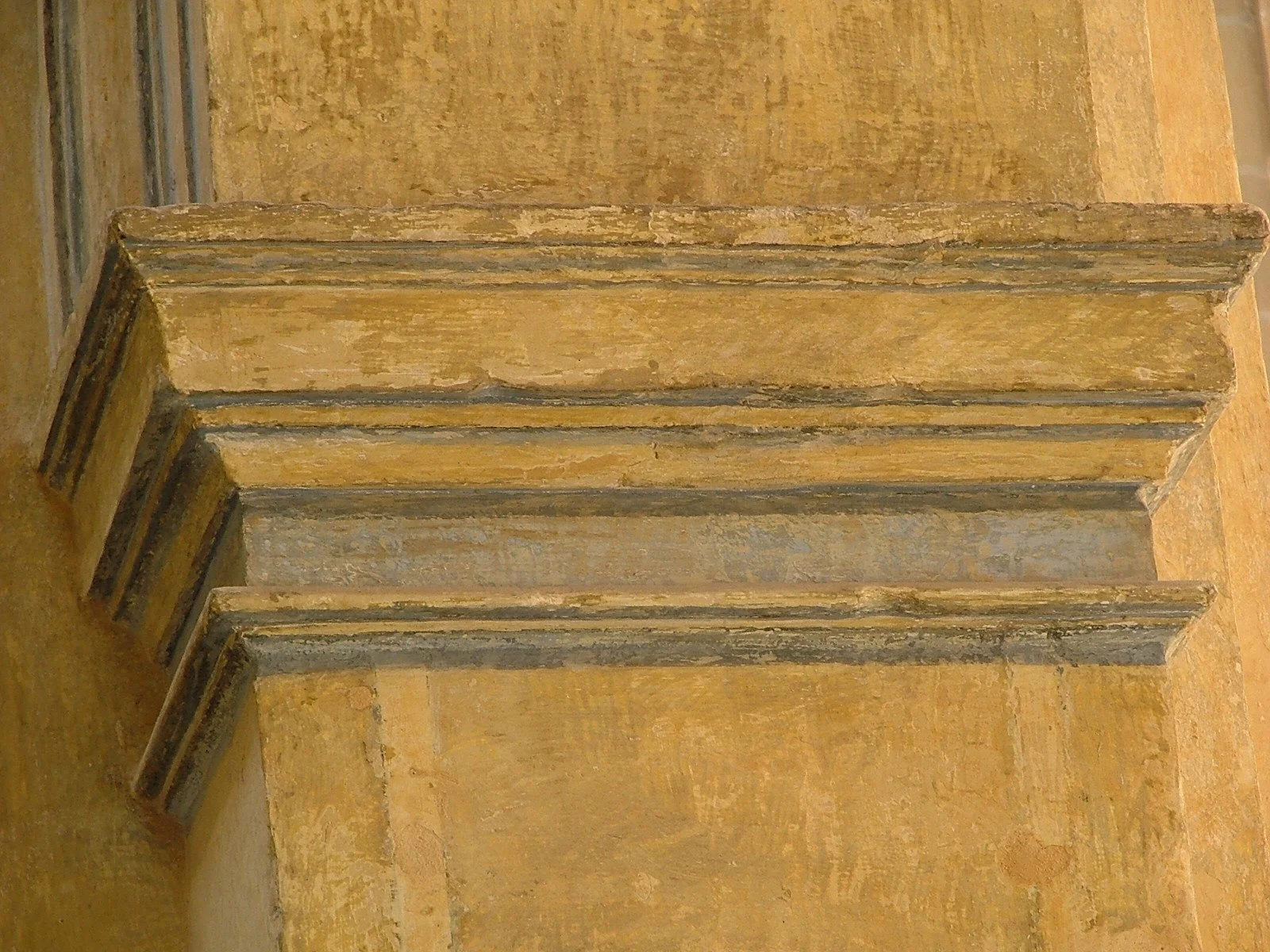
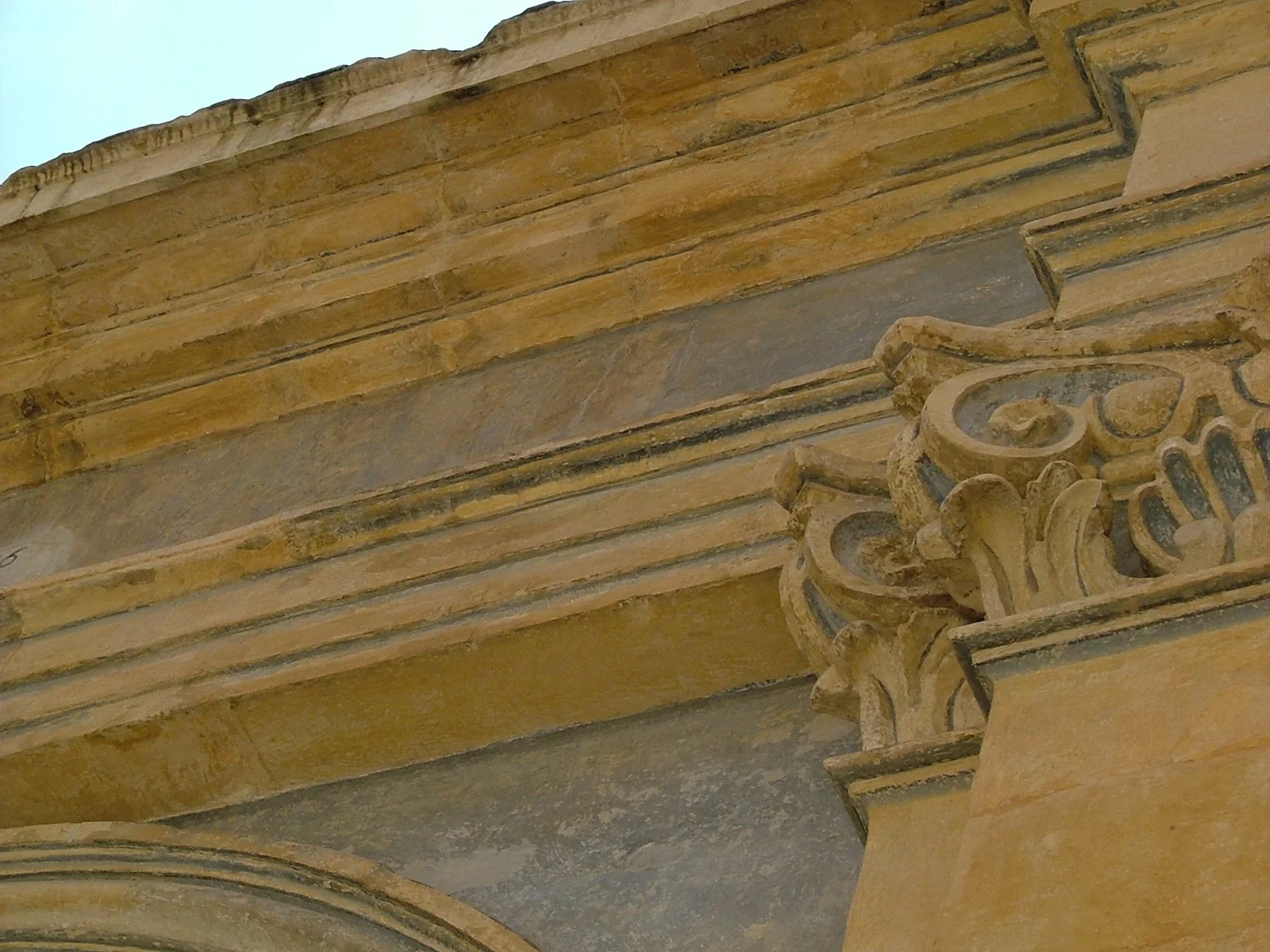
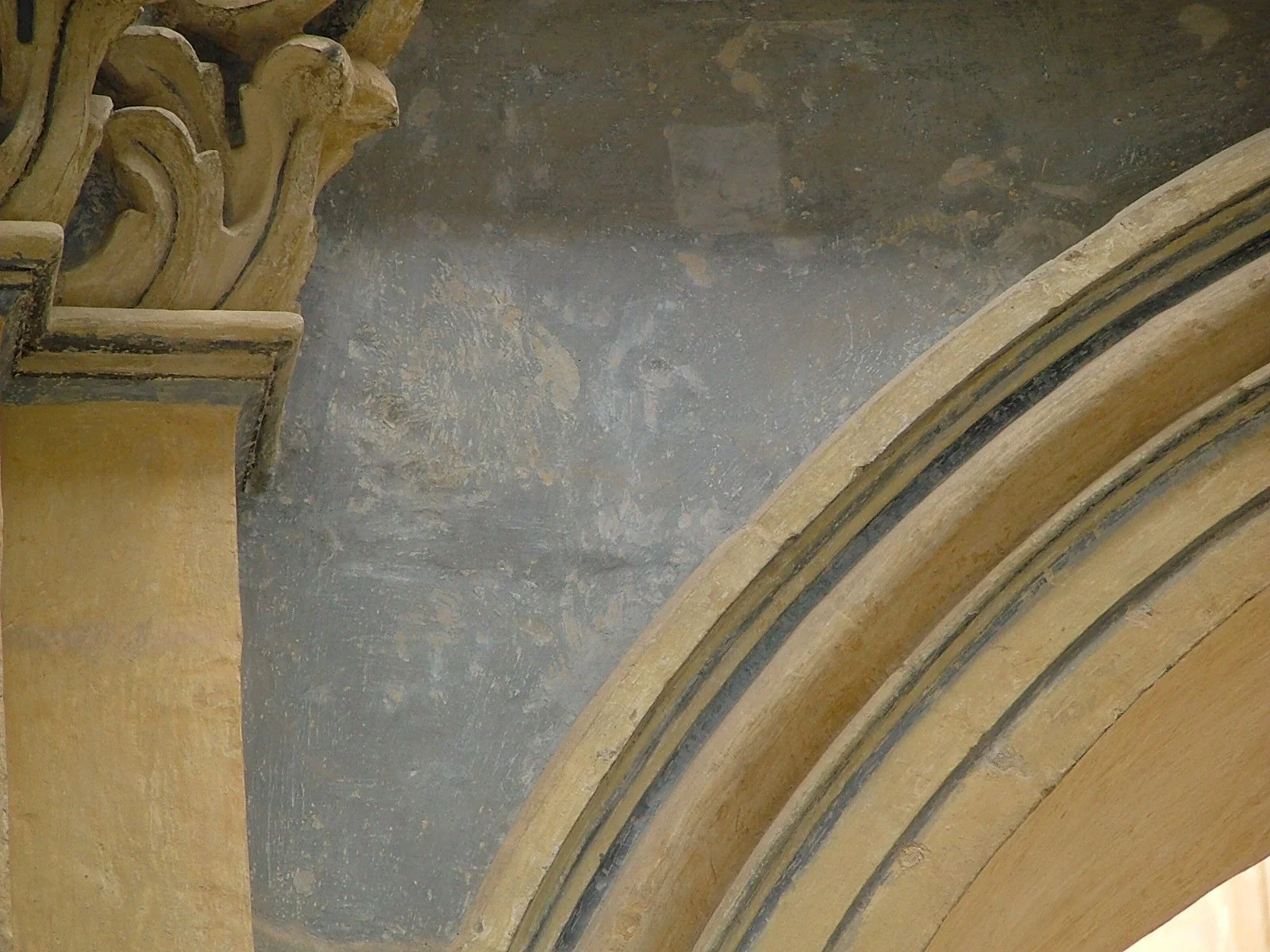
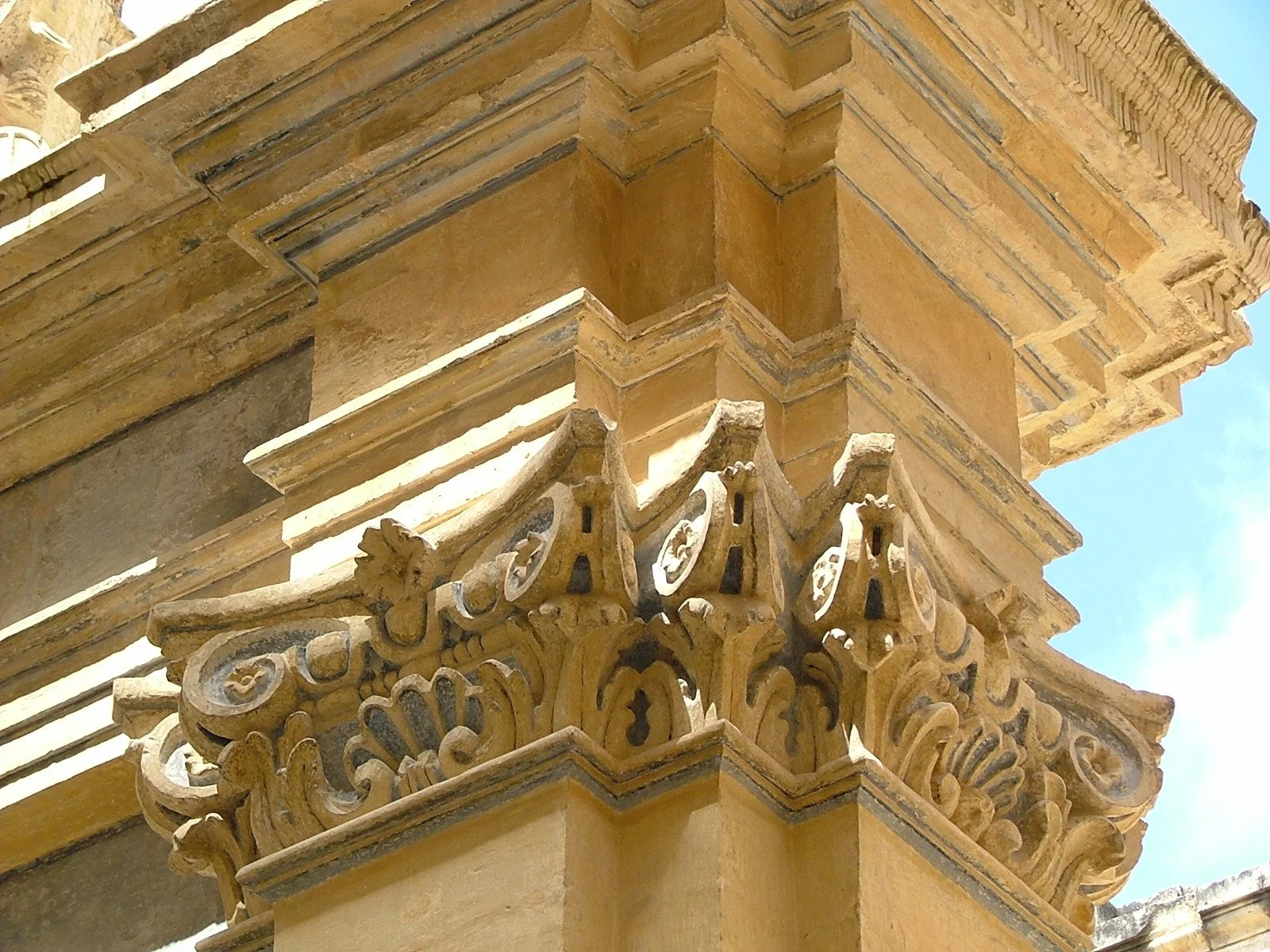
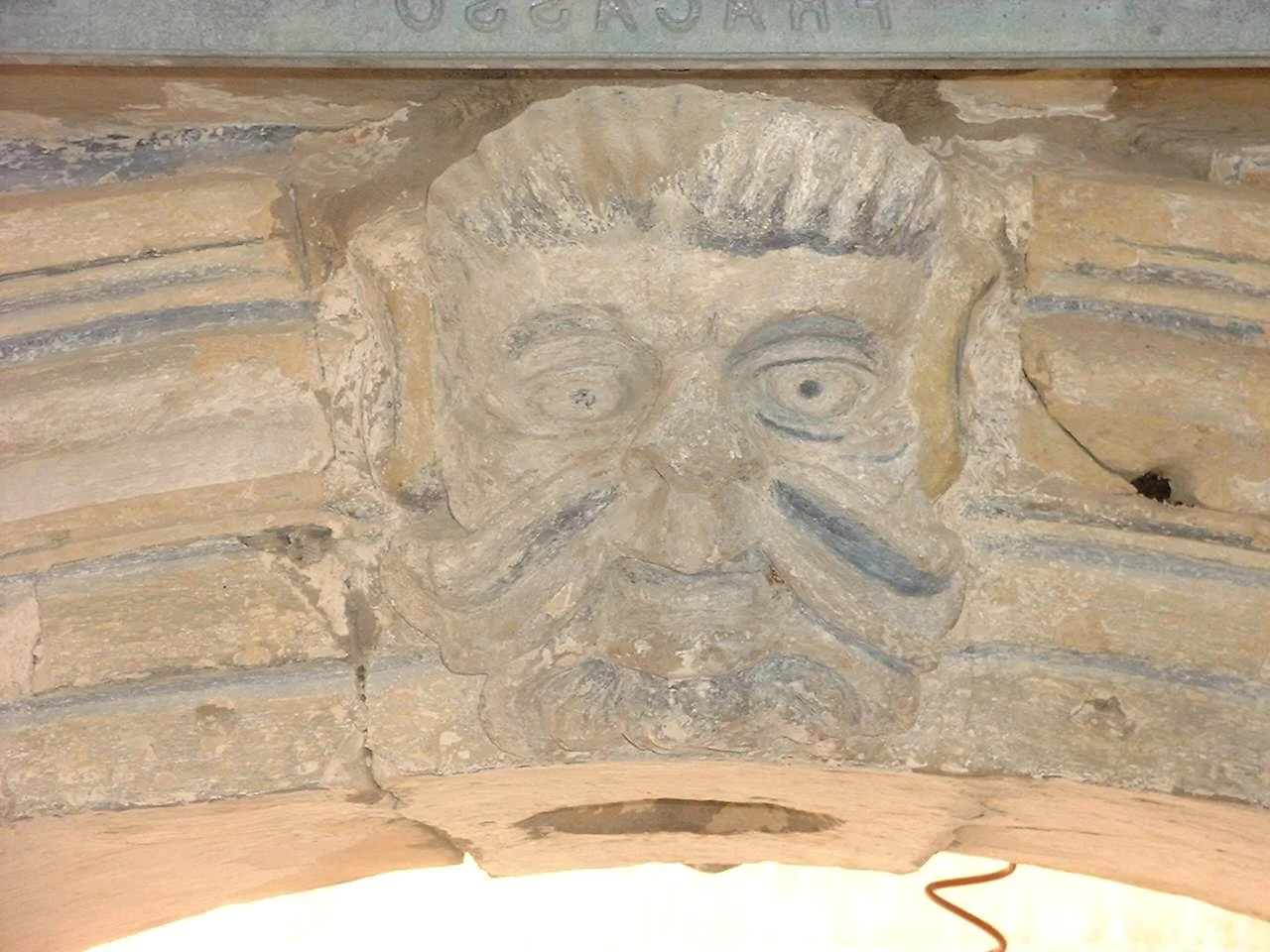
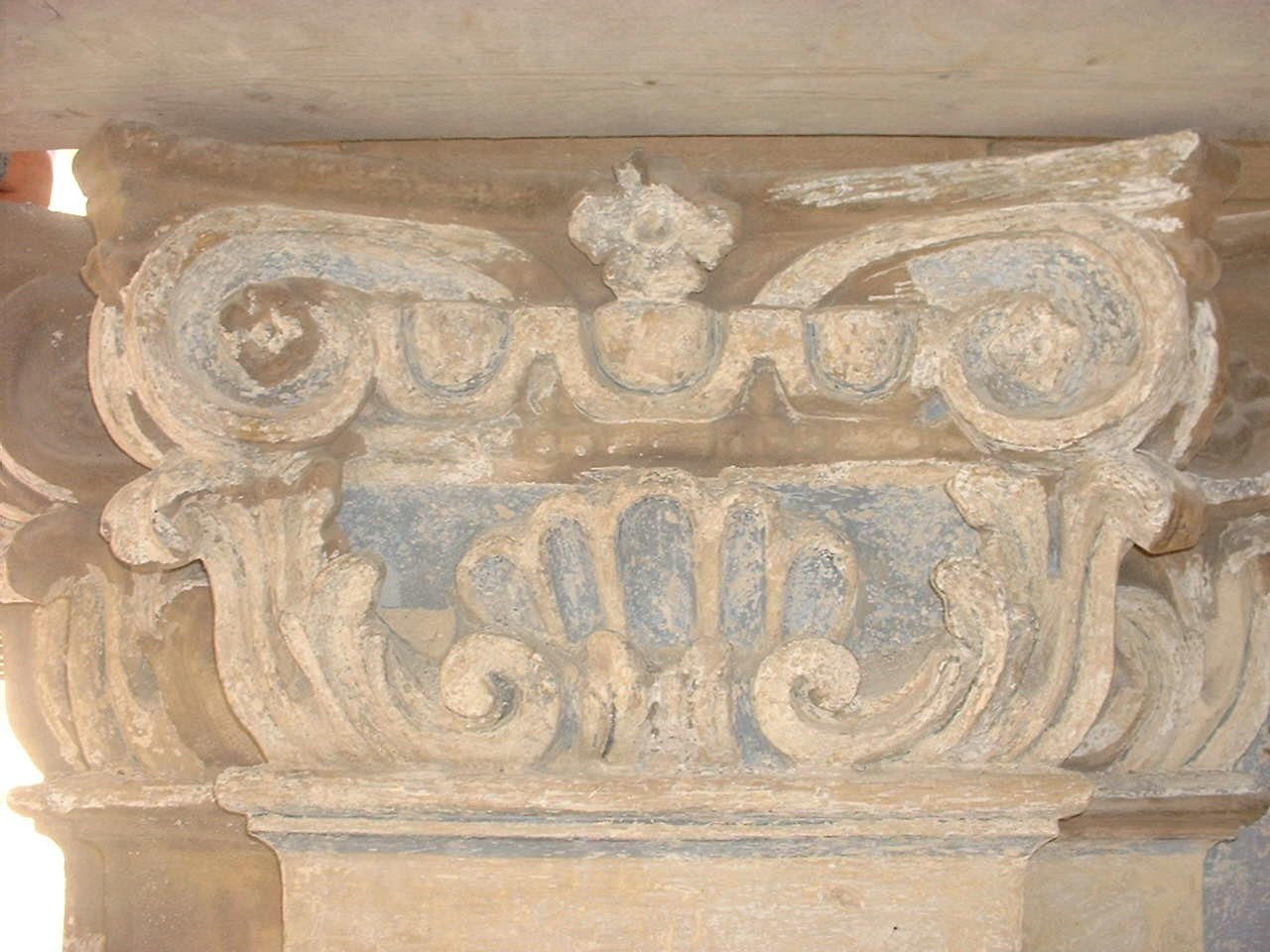
Careful investigations revealed traces of an original decorative colour scheme applied directly onto the stone. As the later layers were gradually removed, a combination of blue-grey, light ochre and white emerged, together with delicate painted shading and highlights.
The identification of the original blue wash was particularly important, transforming the understanding of the Arch's original appearance. Rather than introducing a new interpretation, the surviving colours were carefully uncovered, studied and conserved.
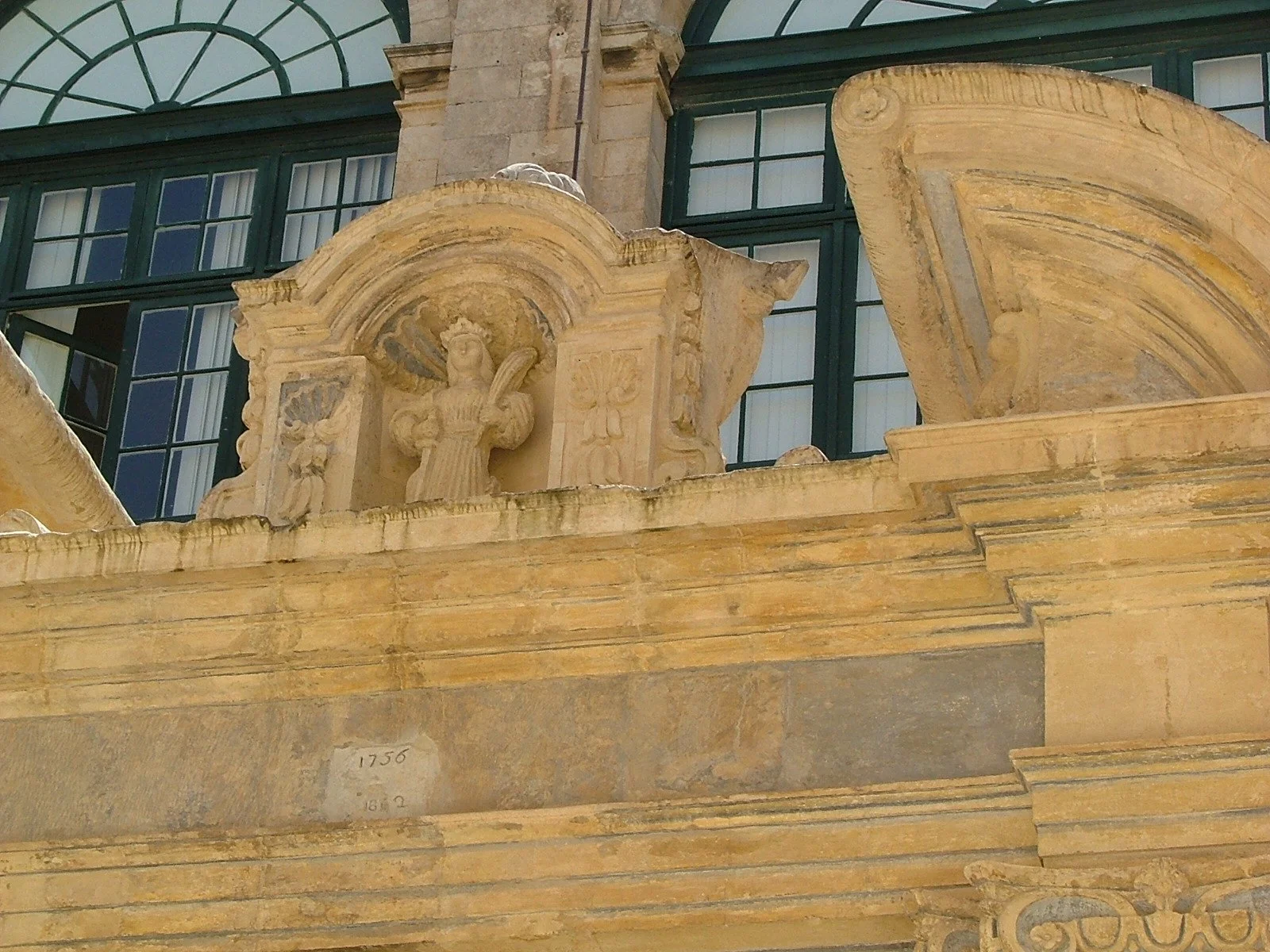
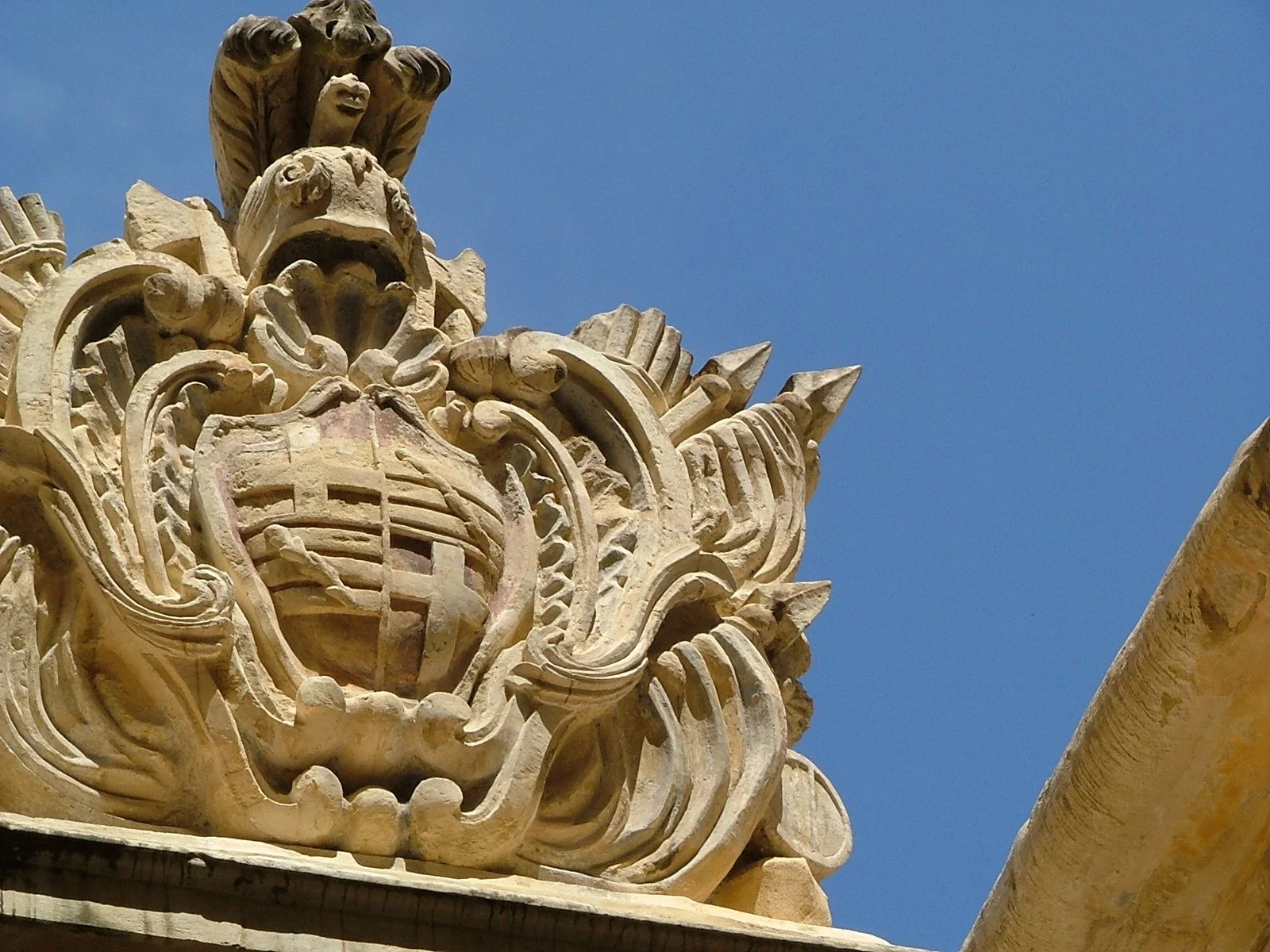
The restoration also revealed painted details on the sculptural and decorative elements, including the masks, the panoply of weapons, the Caraffa coat of arms and the architectural mouldings. These discoveries showed that the monument was originally conceived not simply as exposed stone, but as a richly finished and visually expressive architectural composition.
LEARNING THROUGH CONSERVATION
The restoration provided an opportunity for the students of the Mastru u Sewwej course to take part in a real conservation project.
Working on site alongside specialised conservators, the students gained practical experience in the different stages of restoration. These included the careful cleaning of historic stone, the removal of unsuitable repairs, the treatment of biological growth, the repair of damaged areas and the conservation of fragile decorative and painted surfaces.
This practical approach allowed traditional knowledge and craftsmanship to be developed through direct experience. At the same time, the students learned the importance of working carefully with historic fabric and of understanding the difference between original material, later additions and previous repairs.
The project therefore combined the restoration of an important historic monument with the training of a new generation of craftspeople and practitioners.
CLEANING THE STONEWORK
The first stage of the works involved the careful removal of accumulated dirt, dust and biological growth.
Algae, lichens and other vegetation were treated and removed, while deposits that had accumulated within the carvings and decorative details were carefully cleaned using appropriate conservation methods.
Unsuitable cement repairs, old fillings, nails and other later additions were also removed where necessary. Particular attention was given to avoiding damage to the original stone and the surviving painted surfaces.
The Well was similarly cleaned, with accumulated deposits, biological growth and inappropriate cement repairs removed.
REPAIRING AND CONSOLIDATING THE STRUCTURE
Areas of deteriorated stone and fragile decorative details were consolidated and repaired to improve their long-term stability.
Cracks, joints and areas of loss were carefully filled using compatible lime-based mortars and materials suited to the historic fabric. Where rainwater contributed to deterioration, protective sloping surfaces were introduced to improve drainage and reduce future water damage.
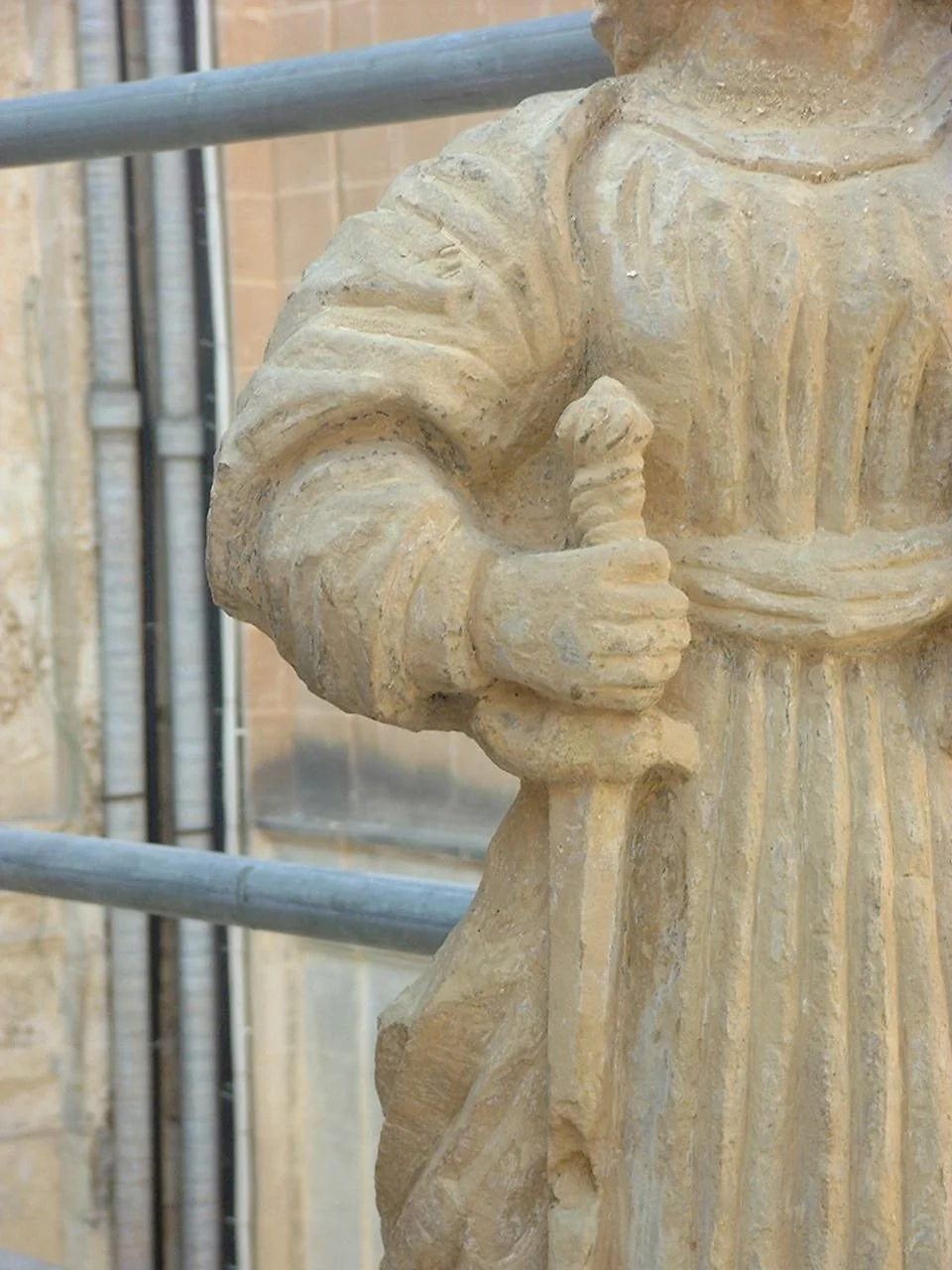
In areas where original decorative stone elements had deteriorated beyond repair, carefully worked replacements in local stone were introduced. This included the reconstruction of a severely eroded element within the niche of St Catherine.
Damaged mouldings on the Well were also repaired using appropriately shaped local stone inserts, replacing earlier crude cement repairs.
CONSERVING THE HISTORIC APPEARANCE
Following cleaning and repair, areas of loss within the surviving painted decoration were carefully reintegrated using conservation techniques that respected the original colour scheme.
The aim was not to create a completely new finish, but to improve the legibility and visual unity of the historic decoration while retaining the evidence of age and the original fabric.
Lime-based colours and watercolours were used to subtly reintegrate areas of loss and abrasion. The lower exposed stone surfaces of the Arch and Well were also given a protective sacrificial finish, providing an additional layer of protection while remaining compatible with the historic materials.
Finally, the surfaces were treated with a protective water-repellent application to help slow down deterioration caused by rainwater.
PRESERVING HERITAGE AND PASSING ON SKILLS
The restoration of the Courtyard Arch and Well conserved an important feature of the Auberge d’Italie while revealing significant evidence of its original appearance.
The discovery of the historic blue-grey, ochre and white painted decoration added a new dimension to the understanding of the monument, demonstrating how colour originally enhanced its architectural and sculptural details.
At the same time, the project served as an important practical training exercise for the newly established Mastru u Sewwej course. By working directly on a historic monument and alongside specialised conservators, students gained valuable experience in conservation practice and traditional craftsmanship.
Through careful cleaning, repair, consolidation and protection, the intervention not only preserved an important part of the Auberge d’Italie, but also created an opportunity to pass conservation knowledge and practical skills on to a new generation.